Media Relations for Craft Chocolate Makers: How to Build a Media List
by David Nilsen & Melinda Guerra
Welcome to our Media Relations for Craft Chocolate Makers series! As a food and beverage journalist, I have communicated with thousands of breweries, distilleries, restaurants, chocolate makers, and other businesses, and I’ve seen ones who maximize their relationships with media members and outlets, and ones who are leaving opportunities on the table. Additionally, my wife and business partner, Melinda Guerra, is a freelance PR professional helping brands tell their stories and connect with media. In this series, the two of us will be sharing what we’ve learned over our careers to help craft chocolate companies of any size identify their stories, communicate them to media members and outlets, gain new customers, and keep the ones you have curious.
In part 1 of this series, we talked about why media relations is so important no matter the size of your chocolate business, and why you need to have a strategy for it.
In part 2, we talked about identifying stories and creating a story list.
Today, we’re going to talk about how to begin building a media list for outreach. We’ll talk about different types of media, how to identify media outlets and members to add to your list, and the information about them you’ll need to gather. In the next blog post, we’ll look in detail at craft chocolate-specific media and media outlets that might seem, on the surface, to have nothing to do with our industry.
A lot of details get covered below, but don’t feel overwhelmed. These are simple steps you can actually follow, and the most important thing to do is just get started. As Melinda said during the podcast episode that accompanies this post, the biggest enemy of getting things done is a blank page.
And one more reminder? No media outlet is too big for you to consider. Believe in your stories.
Types of media
First, let’s talk about the different main categories of media we’ll be discussing.
Legacy: These are the classic news formats like TV, radio, and newspapers, including their online presence.
Local: There’s overlap here with legacy media, but these are news and general coverage local to your city or region.
Industry: These are media outlets that cover craft chocolate specifically or food & drink more broadly.
Other: This is all other media outlets that might potentially be worth reaching out to, even if they don’t initially seem like they’d have anything to do with craft chocolate.
There can be a lot of overlap in guidance between these categories, but we’ll primarily be focusing on the first two in this post, and covering the second two in the next post.
Identifying specific media outlets & members
When it comes to thinking through media outlets and members to add to a media list, you can start by thinking about your own media intake. Where do you get your local news? Where do you find out about events in your area? Where do you read interesting stories about travel, food & drink, or other things potentially relevant to chocolate? Where do you get your news about craft chocolate? You can also ask friends and colleagues where they find these things.
Other places to find media outlets and individuals:
You can simply search on the internet for news or events in your area, magazines that cover your area of the country, etc.
Sometimes a town’s Chamber of Commerce or related organization will maintain media lists on their website you can look through.
You can check out the social media for businesses similar to yours and see where they’ve been featured.
Start by making a simple list
Again, the important thing is to start somewhere. Get out a sheet of paper, or open a doc, or wherever you keep notes, and start writing down all the media outlets and individuals you can think of. Don’t worry about getting them all, as you’re going to continually be adding to this list anyway. Write down TV stations, radio stations, newspapers, magazines, websites, journalists, podcasts, and any others you can think of, and keep in mind many of these categories will have both local, national, and industry-specific components.
The info you need for your media list
Once you have a working list, you can begin filling it out with the contact information you’ll need to begin outreach.
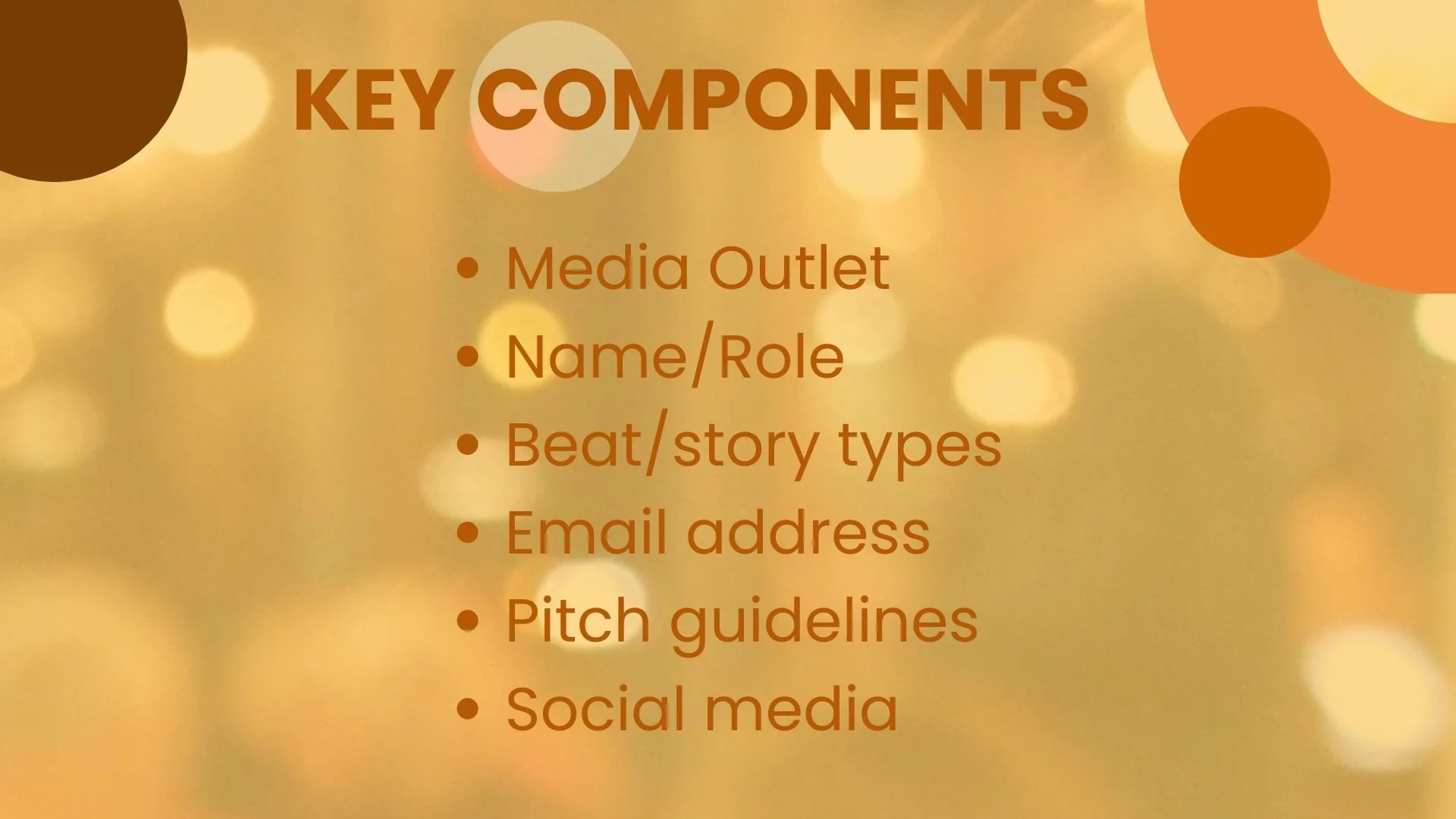
The basic information you’ll need for each entry is: individual contact’s name and role, outlet name (if they’re on staff somewhere), their beat (the topics they typically cover), and their email address.
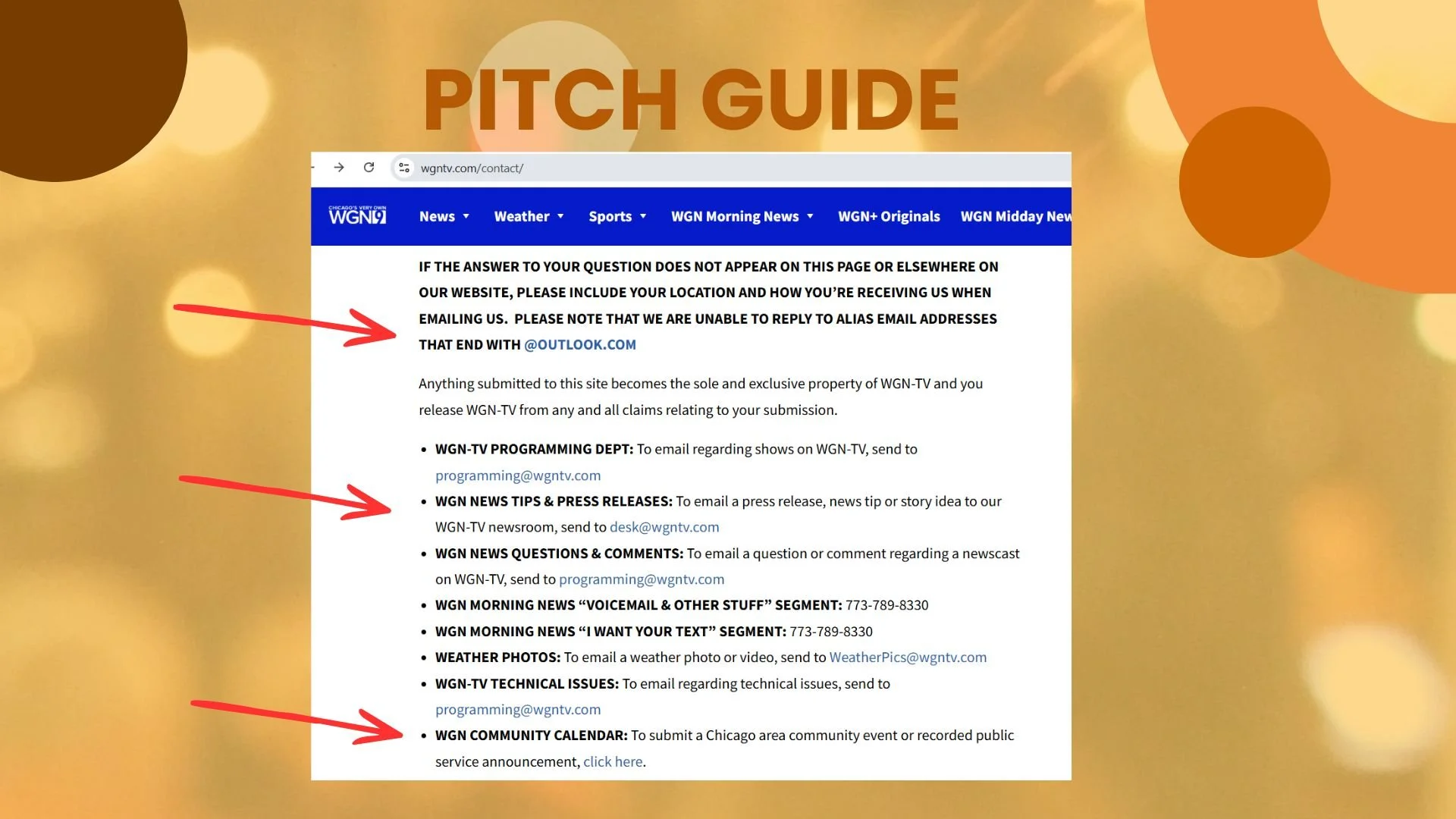
Additionally, when you research each of these outlets or individual contacts in more detail on their websites and social media, make note of any specific information they offer on how they want to receive story pitches or ideas. If it’s a news station, they might have a specific email address for receiving community news, or have a specific lead time requirement for event announcements. If it’s an individual journalist or reporter, they might specifically request you DM them story ideas, or specifically request that you don’t. You need to make note of anything that will make it more likely they will see your outreach and look positively on it when they do.
Here’s one example of a TV station’s guidelines for story tips and pitches:
Social media can be an excellent avenue for finding information for individual media members. Give them a follow, and get to know them a bit by checking out their interests. Some journalists will issues calls for pitches or sources here as well, so keep an eye out for that. Media members tend to move around in the industry a lot, and contact info tied to a specific outlet will change when they leave. Social media will likely stay the same however.
One quick note on LinkedIn: I know a lot of us have mixed feelings about the self-promotion that defines the platform, but it can actually be an advantage for trying to make connections with media members. Because we all understand that’s what the site is for, there’s less of an “ick” factor involved in introducing yourself and promoting what your company is doing. It’s a flawed platform, for sure, but a potentially useful one for connecting with members of the media.
How to find contact info
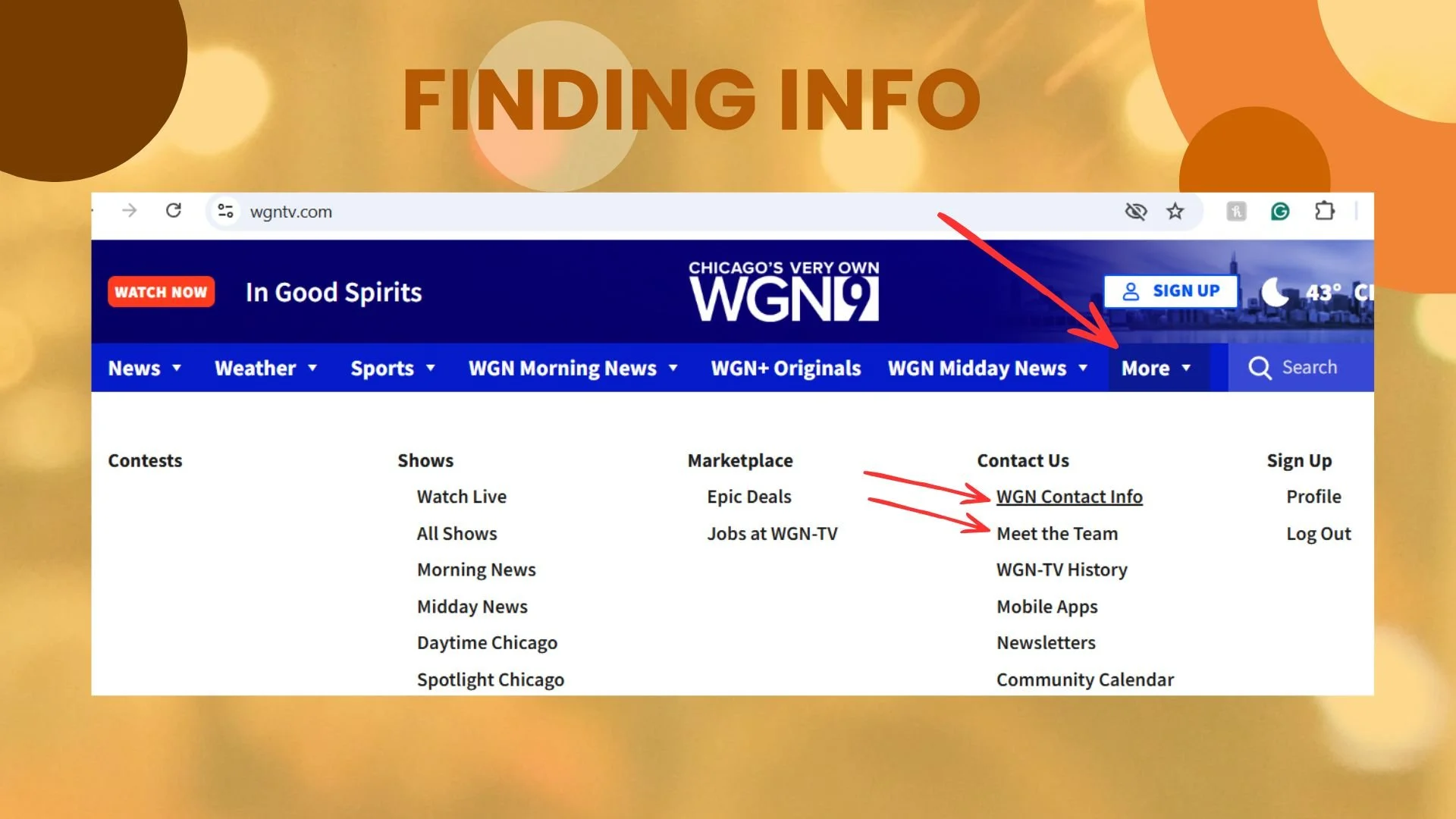
The best places to find elusive contact info for media members include the website for their primary outlet, their own personal website (not all will have this), or their social media. You can also sometimes find contact info in the masthead of a magazine or newspaper. Of course, given the cooperative nature of craft chocolate, you can also reach out to colleagues to see if they have contact info to share.
Initial outreach
When you have a list of media members and outlets you want to reach out to, the best thing to do next is send personalized emails to introduce yourself and your company, or to share the specific story you think they might be interested in. If you absolutely must send a single email to a list of recipients, be sure to Bcc rather than just Ccing, but avoid this if at all possible.
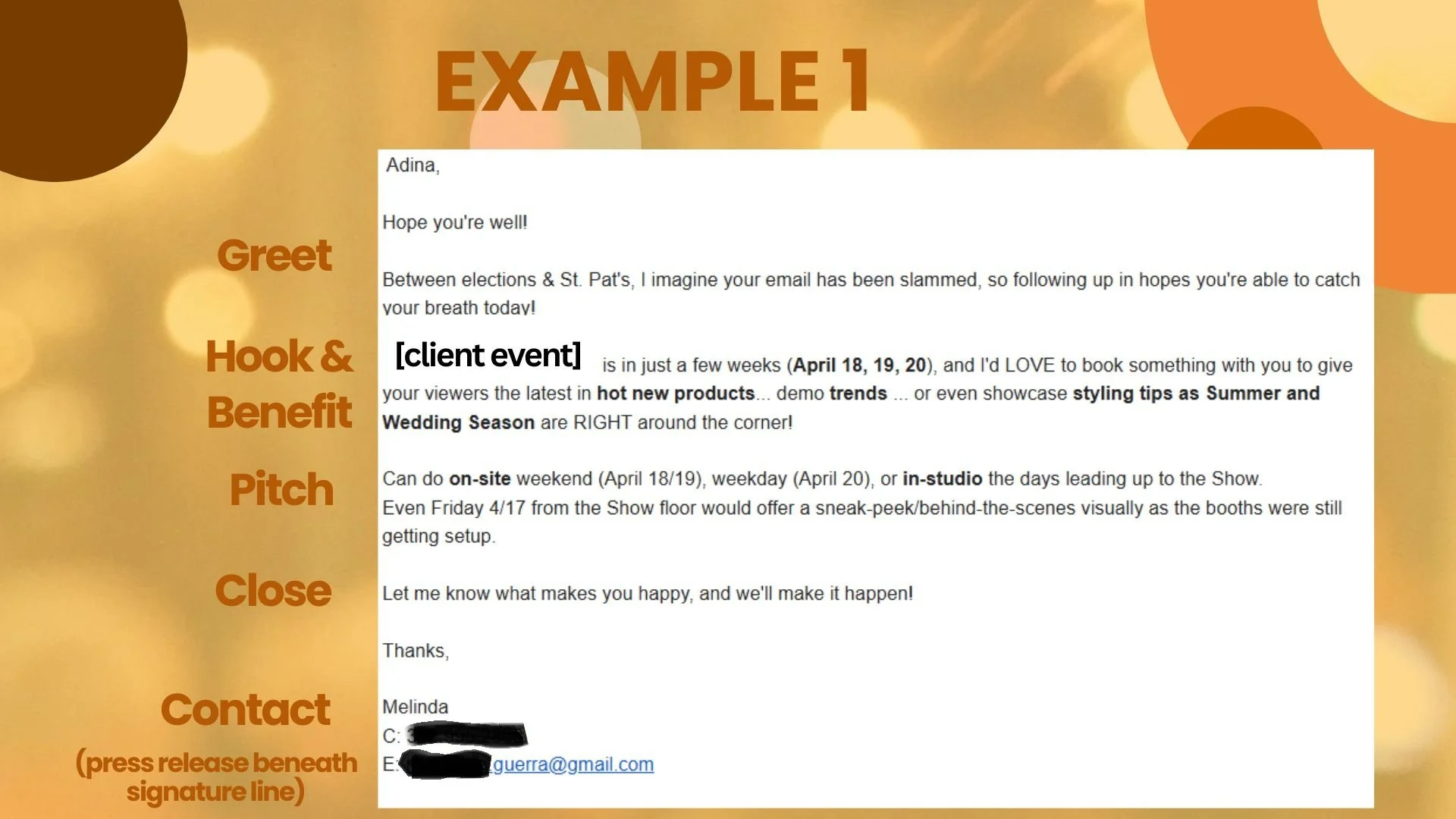
The most important thing to remember is that you need to keep this communication quick and to the point. Greet them, let them know you appreciated a recent story they wrote/covered (be specific), share a few sentences to introduce your company or share your specific story, thank them for their time, and let them know how to contact you if they want to pursue the story. Include your name, title, company name, and email address (yes, even if you’re sending this in email - sometimes these get printed and handed to a producer, etc).
Here are a couple example emails:
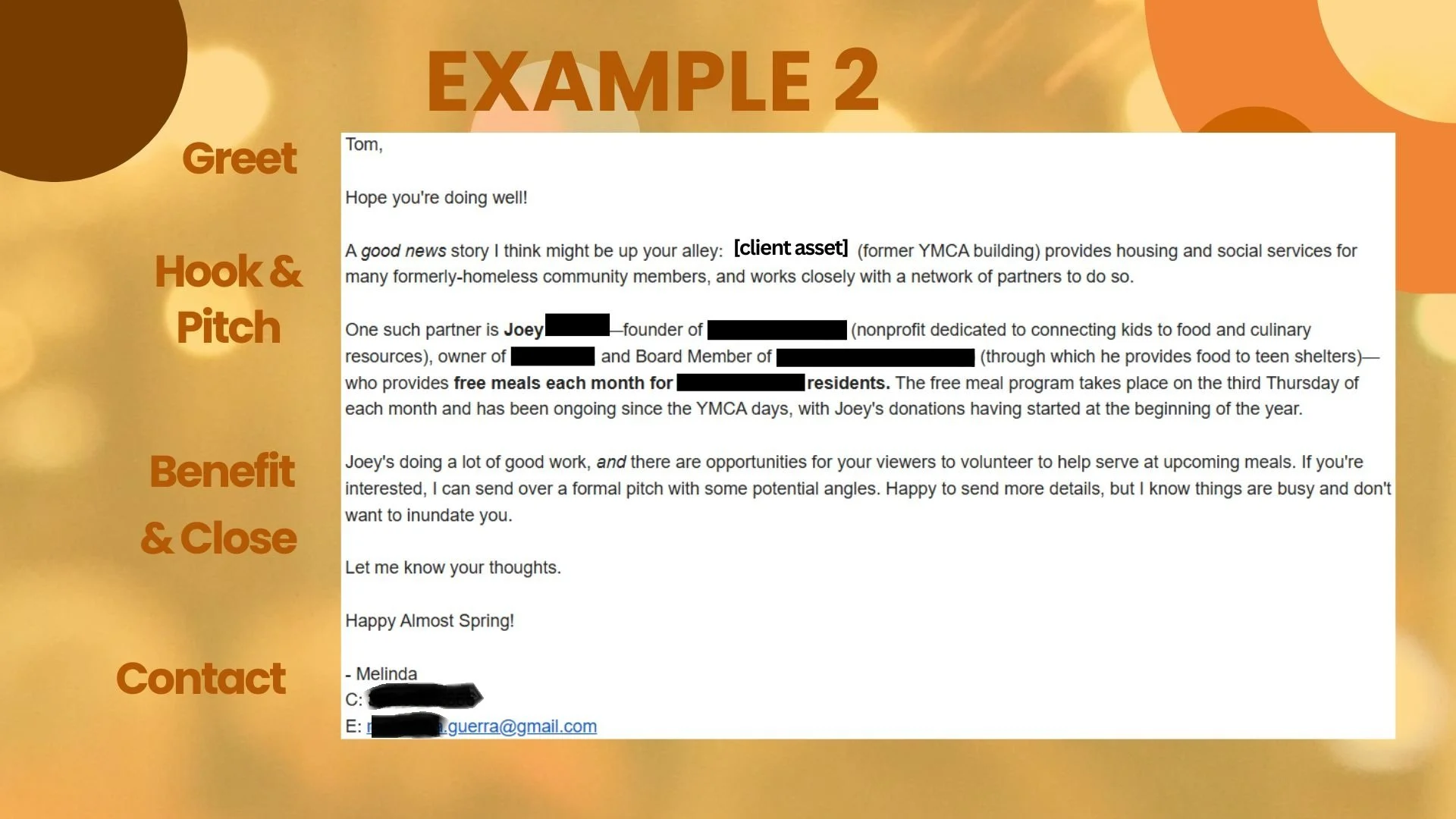
A few critical things to keep in mind when sending this:
Get to the point quickly. Help them see why they should care. Why is what you’re sending interesting?
Be available to respond if you get their attention. Have a way to get notifications, and respond promptly. This is especially important with legacy or local news, as they are likely working on deadline.
It’s okay if they don’t respond. It doesn’t mean they hate you or think you’re trivial and you should never pitch them again. They’re busy. You can pitch them again later.
Make sure the story fits their beat and type of coverage.
Don’t use AI to write your email. If you can’t be bothered to take the time to share your own passion for this, why would you expect them to do it for you.
In the next blog post in this series, we’ll be looking specifically at media related to craft chocolate, food and drink, and other topics that might not immediately seem like good targets for you, but can be.
The most important thing? Just get started!
Media Relations for Craft Chocolate Makers series
Podcast Episodes
Why You Need a Media Plan
Identifying Your Company’s Stories
How to Build and Manage a Media List
All About Press Releases
How to Maintain Media Relationships and Communicate New Stories
How to Get Started, and Common Pitfalls
Blog Posts
Why You Need a Media Plan
How to Identify Your Stories
How to Build a Media List (you’re reading it!)
Adding Industry and Unexpected Outlets to your Media List
How to Write and Send a Press Release
How to Maintain Media Relationships and Communicate New Stories
Crisis Communications
What to Do After You Get Media Coverage
Common Pitfalls, and Easy Steps for Getting Started