Collaboration for Chocolate Makers: Working with Beverage Alcohol Producers
This post of part of my Collaboration for Chocolate Makers, in which we talk about how and why craft chocolate makers should we working with other businesses to expand their customer base, increase their revenue, and tell their story.
Today, let’s talk about something near and dear to Bean to Barstool: collaborations between craft chocolate makers and beverage alcohol producers. How and why should you partner with breweries, distilleries, and wineries? We’ll talk about how some of the topics from part 1 apply specifically here, as well as discussing ideas for collaboration projects.
In part 1, we talked about the benefits of doing collaborations in general, and broke these down in two main categories: financial benefits, and cultural and institutional benefits.
Let’s look at how those benefits from part 1 apply specifically to collaborating with alcohol producers.
(Quick note: while chocolate pairings are definitely a form of collaboration, for the purposes of this series we’re looking at product-based collaborations where you’re going to partner to make a new chocolate or beverage product.)
Financial Benefits
Expand your customer base. Working with a brewery or other alcohol producer can get your brand and your products in front of craft consumers who may know nothing about craft chocolate. While the fans of a local brewery might not know about cacao, chocolate making, or craft chocolate yet, partnering with that brewery can get those consumers interested in what you’re doing.
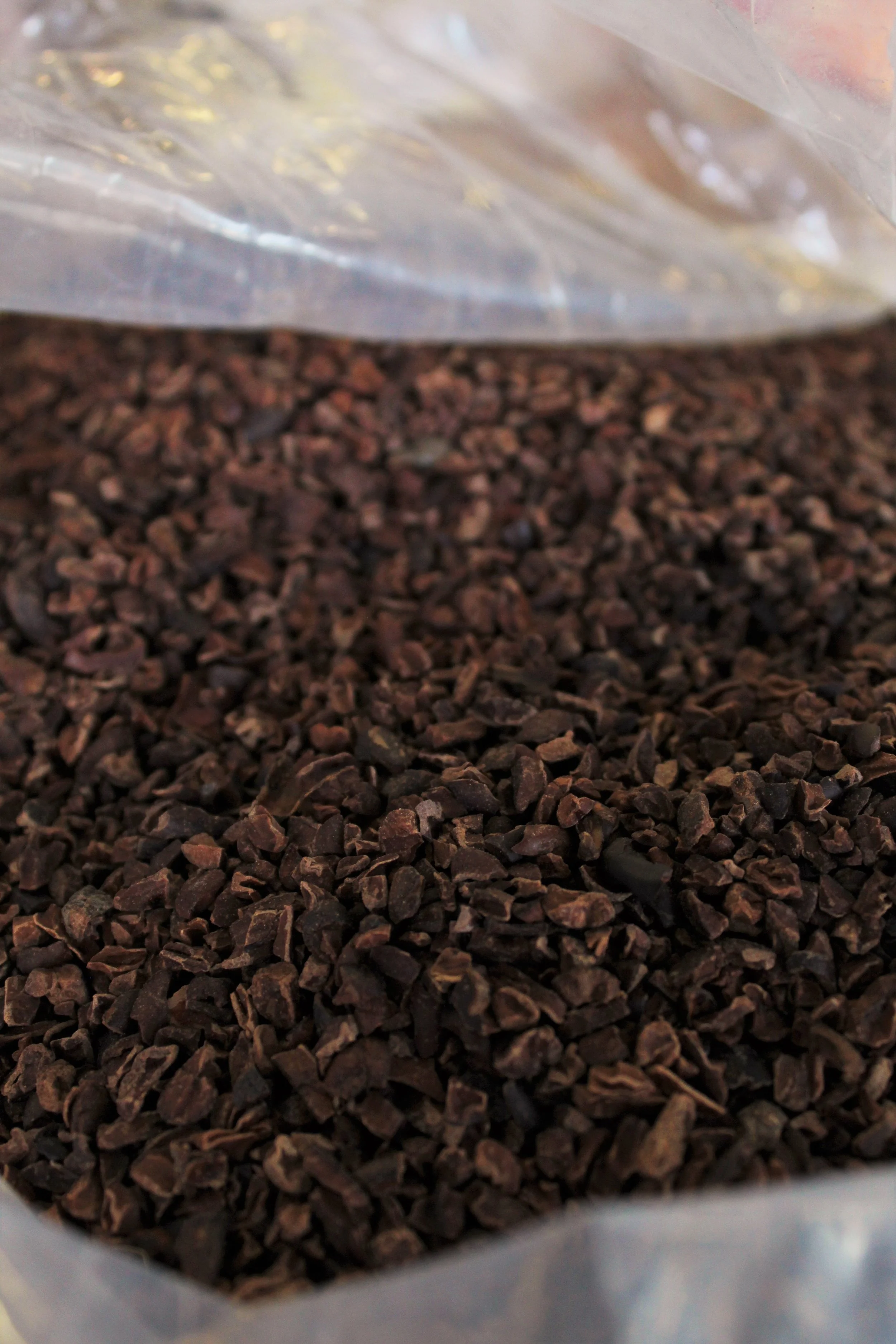
Generate ongoing revenue. Partnering with an alcohol producer—especially a brewery—can lead to ongoing ingredient sales. They likely buy their cacao nibs currently from a major supplier without thinking much about it, but working together provides an opportunity for you to show them they can get better, fresher, and more customized nibs or other ingredients by buying them from you in the future.
Cultural/Institutional Benefits
Creative infusion. Working with a beverage producer can help you think about ingredients, processes, and flavors in a whole new light. There is nothing like being around creative people from a different segment to get your creative excitement flowing!
Storytelling. This same creative infusion can extend to your fans. Collaborating with a brewery, distillery, or winery can allow you to provide unique content for your fans and get them to think about your products in a new light.
When partnering with a beverage alcohol producer, there are two main avenues the collab can take: chocolate-based and beverage-based. We’ll discuss drinks-based collabs below, and look at chocolate-based ideas in next week’s blog post.
Drinks-Based Collaborations
Drinks-based collaborations are going to involve you providing cacao (or, rarely, finished chocolate) in one or more formats to the beverage maker to create an infused beer, spirit, or other beverage. This sort of collab is going to be the easiest lift for you as a chocolate maker, because you won’t be the one making, packaging, and distributing the actual product. Your role is as an ingredient provider, as well as an advisor and educator to both the producer and their customers.
Breweries
Collaborations of this sort are most common with craft breweries. There are nearly 10,000 breweries in the United States, and a whole lot of them periodically make chocolate-flavored beers using cacao nibs or other ingredients. This is one of the few areas of collaboration where I already see a lot of chocolate makers participating, but there are still missed opportunities. Reaching out to a local brewery is probably the easiest place for you to start with collabs of this sort, and—as discussed above—can lead to ongoing revenue opportunities.
Distilleries & Wineries
Craft beer culture typically allows for a lot more experimentation than distilling and wine-making do. For this reason, most of the collabs we see between craft chocolate and these types of producers happen on the chocolate side of things. That said, there are some distilleries that make spirits or liqueurs infused with cacao nibs. Rum and gin are the most common spirits for this.
RTDs
Ready-to-drink canned or bottled cocktails are a growing segment in beverage alcohol, and I’ve seen more bartenders experimenting with different forms of cacao lately. Approaching a drinks-maker about the possibilities of an RTD cacao-infused cocktail could be a fun way to do something totally unique. This is an untapped opportunity currently.
How the Collab Will Work
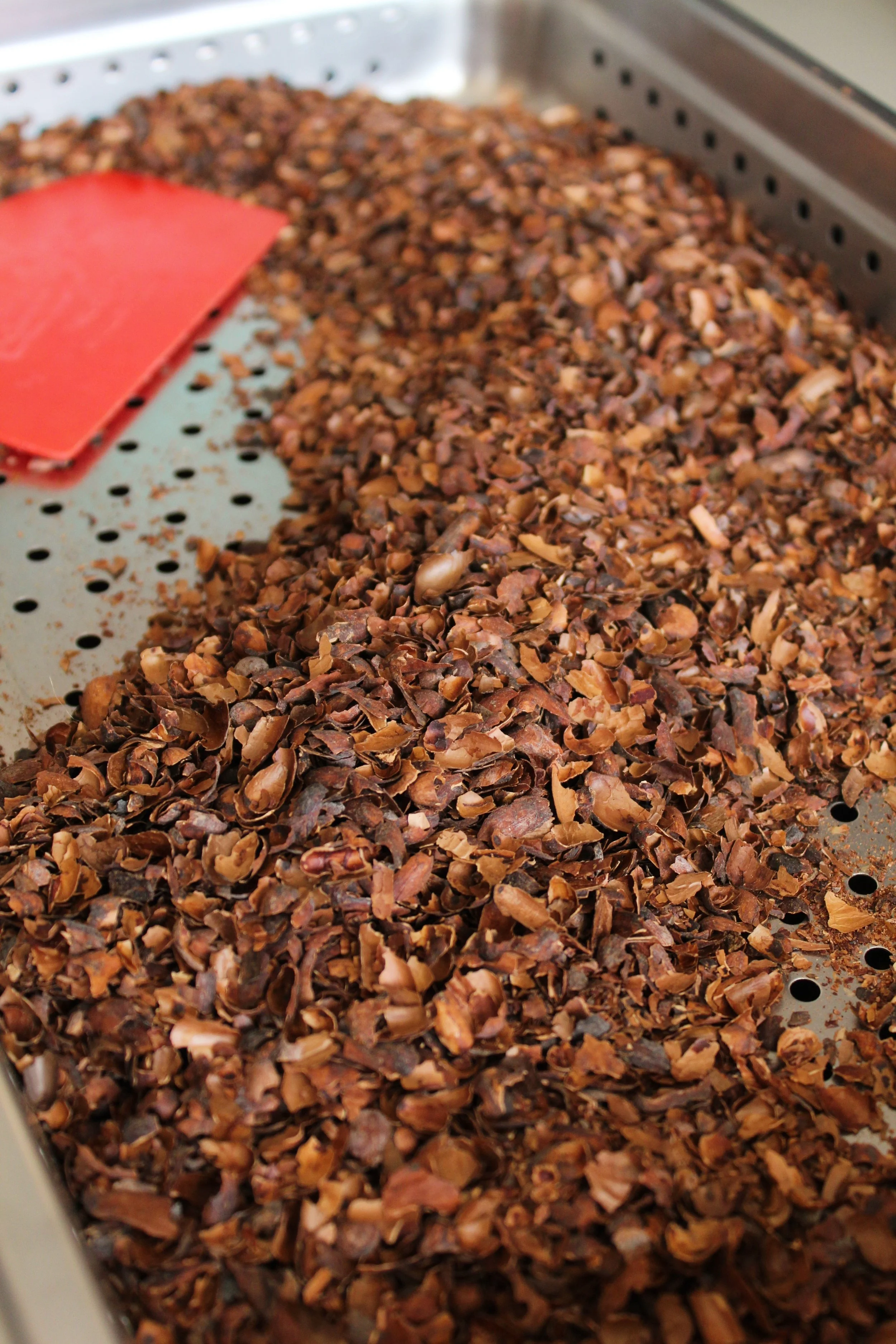
When you discuss collaborating with a brewery or other drinks maker on a cacao or chocolate beverage, it’s going to be easiest to discuss a finished concept and then work backward on what ingredients you’ll need to get there. Cacao nibs are the most common ingredients to use here, but cacao husks, cacao butter, and even cacao fruit pulp can also be used. You’re not likely to be able to provide cacao fruit for a collab, but the others are all possibilities. You can either bring various origin options to their facility, or—perhaps more in the spirit of equal collaboration—invite them to your chocolate factory to sample things and see how chocolate is made. You can decide on format, origins, and even roast profiles.
Once you all agree on a concept and the ingredients needed, make sure you discuss the production schedule and when the cacao will be needed. While technically you don’t need to be present when they add the cacao to the beer or spirit, you’re going to want to be so you can get photos and videos for promoting the collab. The cacao is almost definitely going to be added days or even weeks after the initial brew day, but if your schedule allows, I would suggest being present then too. You’ll learn things, and it’s a reminder to both you and the producer that this really is a full collaboration you’re taking seriously.
Considerations When Partnering with a Beverage Maker
Start local. You probably already know the beverage producers in your town or region, and likely share some customers. Approach them with a clear pitch for the collab you have in mind. Explain the mutual benefits, and how you foresee the scope of the project and the division of labor. Explain your vision for marketing the end product. You want to make it easy for them to say yes to your idea, and to be equal creative partners in the collab. Be open to their creative ideas too!
Make sure your values align. As discussed in Part 1, your name is going to be linked with that of your collab partner, so you want to make sure that will help and not hinder your business’ reputation. Do some digging, ask some questions. This isn’t snooping, it’s due diligence.
Plan everything in advance. The day of the collab is not the time to figure out details. Agree on a clear schedule for the collab in enough time to make sure ingredients, production, marketing, and release details are all ready when they’re needed. Decide on who, what, when, and where for every component of the project. Just like any other business, some breweries and distilleries are more organized than others. Make sure you and this partnership are being taken serious, and give equal respect in return.
Plan the release. The storytelling and marketing for the release are as important as the product itself when it comes to collaborations. In order to get all the benefits discussed above, you need to maximize the opportunities you’re provided. Discuss and schedule a release event in keeping with production time. Make sure any photos, videos, or other assets are captured during the process, because the collaboration continues on social media after the production collab itself is finished. Don’t leave this to We’ll figure it out later. Also, make sure any technical or descriptive language for marketing is agreed upon; when partners from different fields collaborate, it’s easy for one or both to misrepresent the ingredients or products of the other without intending to.
In the next post, we’ll discuss chocolate-based collabs, and how you can craft products using drinks or drink ingredients from collaboration partners!
Collaboration for Chocolate Makers series:
Podcast Episodes
Why Do It, and General Considerations
Collaborating with Beverage Alcohol Producers
Collaborating with Other Craft Chocolate Makers
Creative Collaborations to Consider
Collaboration Case Study: Estelle Tracy
Blog Posts
Why It’s Worth It, and Things To Consider
Collaborating with Beverage Alcohol Producers, and Drinks-Based Collabs (you’re reading it!)
Chocolate-Based Collabs with Beverage Alcohol Producers
Collaborating with Other Craft Chocolate Makers
Creative Collaborations to Consider
Collaboration Case Study: Estelle Tracy