Experiments in Tasting with Jorge Torres
Editor’s note: Jorge Torres has been a big supporter of Bean to Barstool and my other projects over the years (in full disclosure, he is also a Patreon Pro Sponsor). In November, he and Professor Robyn Araiza were on the podcast to discuss Robyn’s Chemistry of Chocolate course, as well as Jorge’s project for the class, which involved tasting and pairing beer and chocolate. I thought it would be fun to have Jorge write about the experiment and present some of his findings here on the blog. You can read more of his work on his blog, The Beer Blog Villain. Enjoy!
By Jorge Torres
In the spring of 2025, I took a class at California State University San Marcos that looked at the chemistry of chocolate. It was an upper-level science course for non-STEM students like myself. Being a beer and food-science enthusiast, I saved this course for my final semester of college as a bit of a treat! During this class I completed a tasting project involving four chocolate bars and one beer, the main focus of which was to survey how people subjectively described and ranked individual chocolates and how those chocolates paired with beer.
The beer I landed on was from Pizza Port Brewing and was named Bacon and Eggs, an 8% ABV Imperial Coffee Porter. Don’t worry, it doesn’t actually taste like bacon or eggs, but the coffee and roasted malt make it reminiscent of a bold cup o’ joe one might find yourself having alongside bacon and eggs at breakfast. It’s a fantastic choice to play with dark chocolate given that the coffee notes are familiar without the pairing feeling monotone.
The chocolate used was made by Nibble, a local maker. It was important to me that the chocolates used be as similar as possible, with the only variation being the origin of the cacao, so I snagged single origin bars made with Ecuador, Peru, Ghana, and Madagascar cacao. I also knew that the differences in the expression of the respective origin’s impact on flavor would be more pronounced at a higher percentage. Nibble does make higher percentage single origin bars, but I found that 72% dark bars were a good compromise. This intensity still paired well with the beer for me.

Now it was time to conduct the survey! I gathered the majority of my participants at one of the local Pizza Port locations, making it easier to source fresh Bacon & Eggs, though this also welcomed some interfering pizza aroma from the combination brewery-pizzeria. Each participant received an initial 4 oz pour of Bacon and Eggs in a tapered tulip glass. Chocolate samples were portioned and labeled simply as Samples A, B, C, and D to preserve blind conditions. Participants were instructed to not discuss their impressions out loud until the full tasting was complete to minimize influence and bias. This was a surprise for a handful of folks who were more under the impression that this was primarily a recreational experience. Free beer and chocolate was enough of a treat, so they were happy to oblige.
I prompted them to open up a Google survey on their phones and gave them a bit of a rundown on the sensory process. It can be intimidating and vulnerable to give your opinions on what you smell or taste on a panel, so I think that's one benefit of eliminating the option to share what we are thinking out loud. To that same point, I provided some pretty approachable descriptors that included terms like bitter, chocolatey, fruity, acidic, and sweet. There were still some eager participants who couldn’t help but share their thoughts. Sometimes this was apparent via the enjoyment or disdain we could see in their expressions! I didn’t police things like this too much. I didn’t see a point in yucking anyone’s yum and we were all going to share our opinions soon enough.
There were some clear favorites among those who participated. Sample A (Ghana) and Sample C (Peru) were the clear frontrunners among the chocolate bars. Ghana was just barely the most popular individual chocolate for everyone. Interestingly, Peru took the win when it came to the participants' favorite to pair with the beer. I think this can be attributed to participants finding more acidic and fruity notes in the Peruvian sample than Ghana. It was just contrasting enough to still hang with the beer. Madagascar was polarizing as it can bring such a myriad of flavor. Adventurous tasters seem to thrive here, but it had too much going on for many newcomers to enjoy. Lastly, the Ecuador sample trailed in all the polls, but I believe this was because of the addition of coconut oil, a distinction I had not noticed prior to the tasting.
Below are graphs showing participant responses to the individual chocolates, and their favorites overall.
Sample A: Ghana
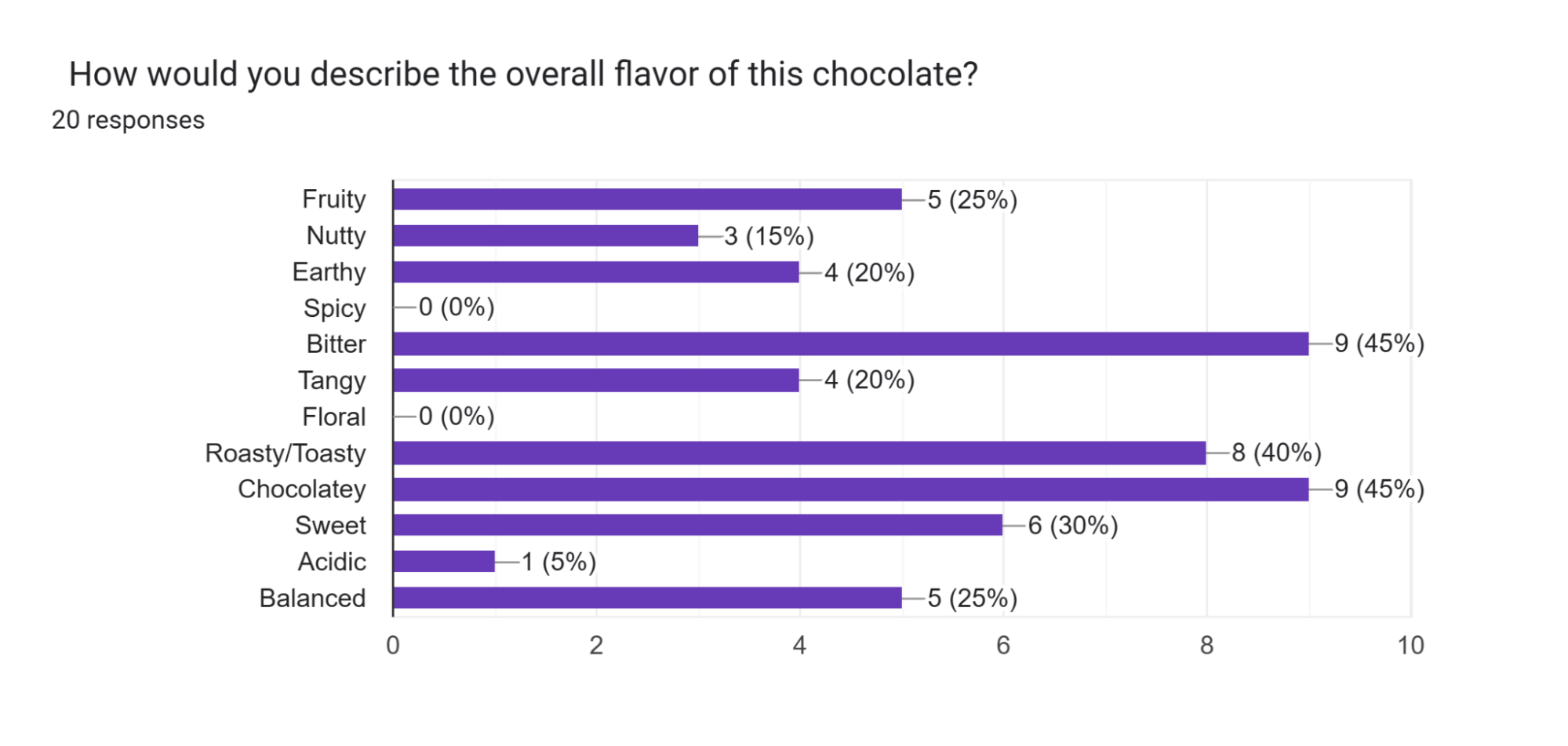
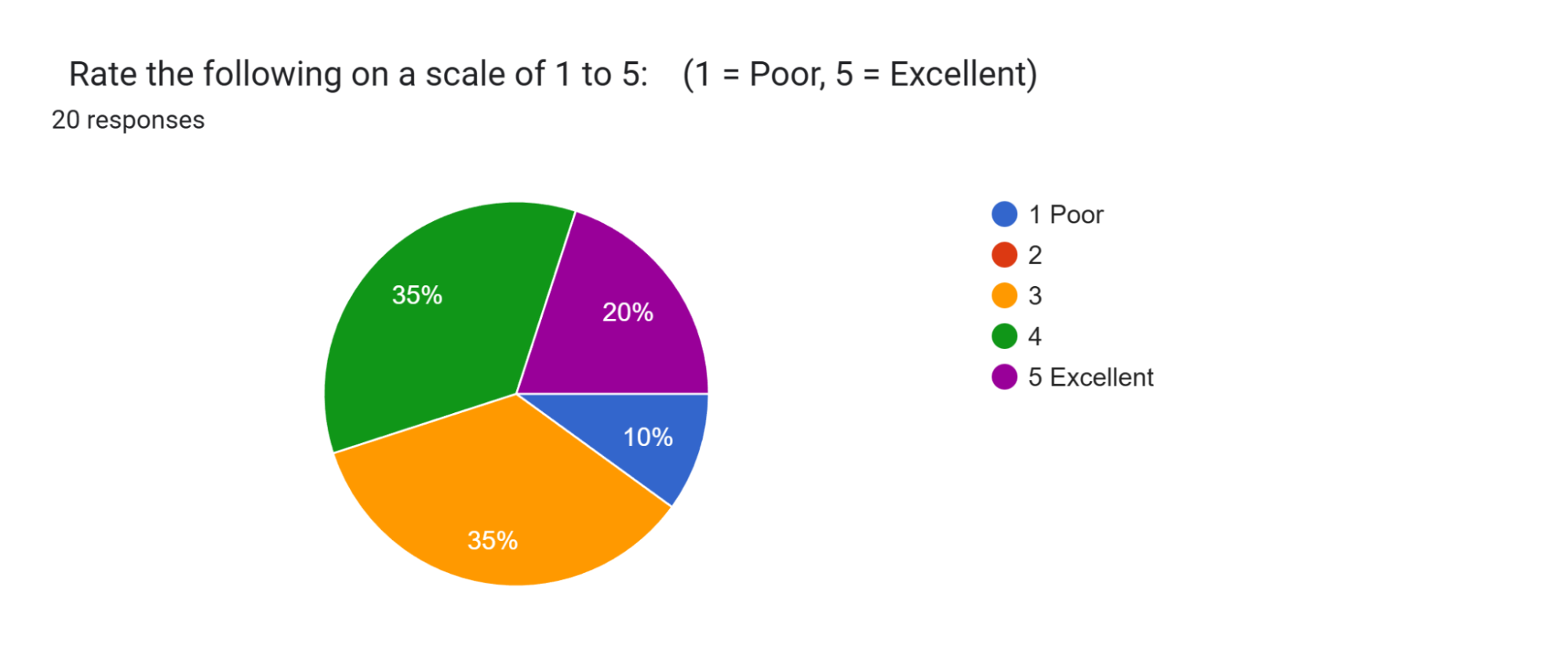
Sample B: Ecuador
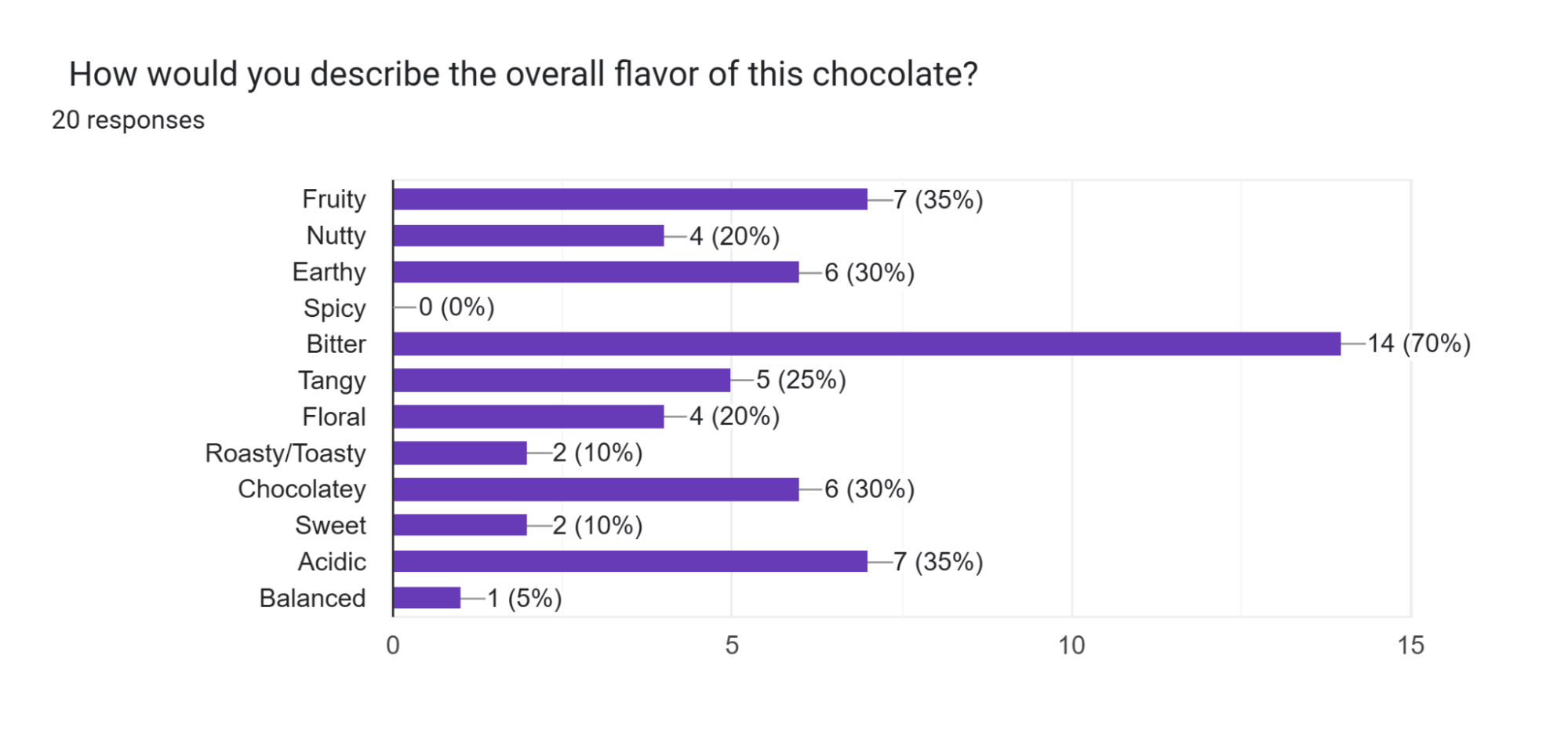
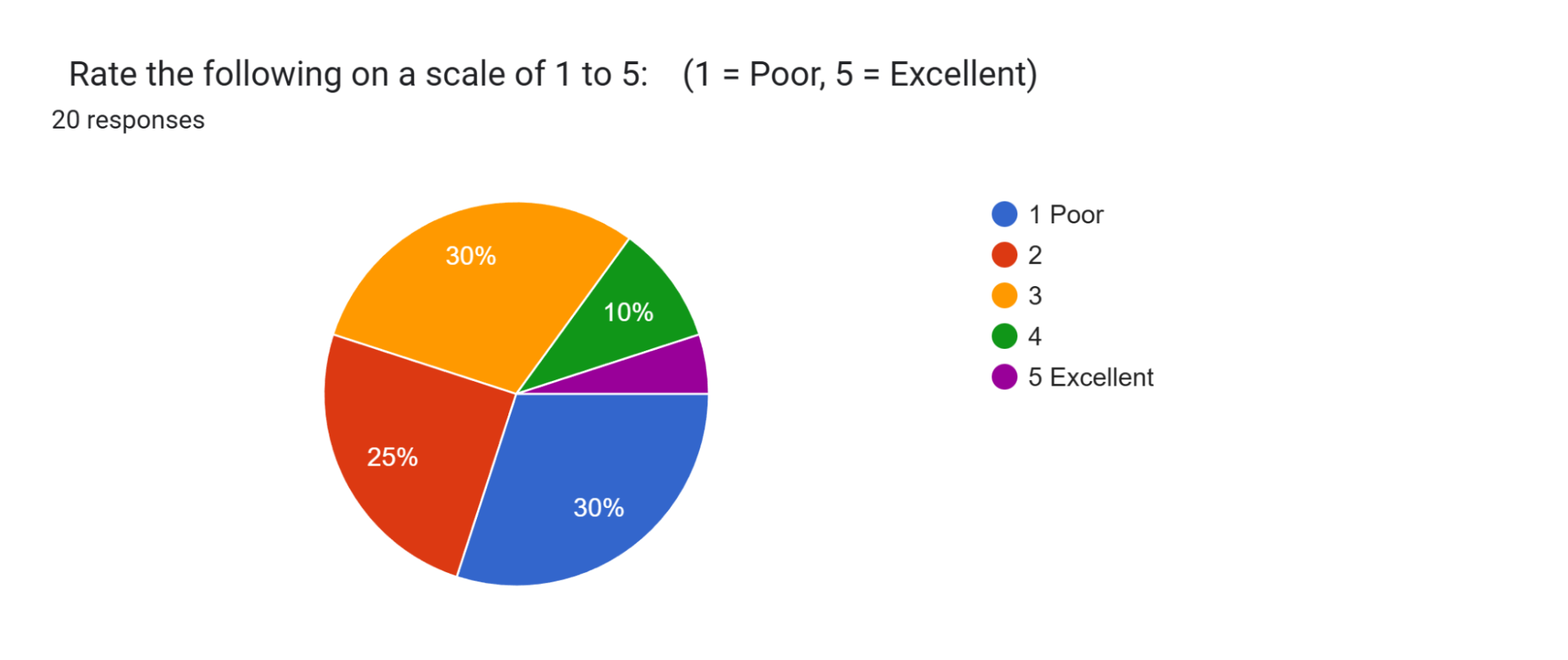
Sample C: Peru
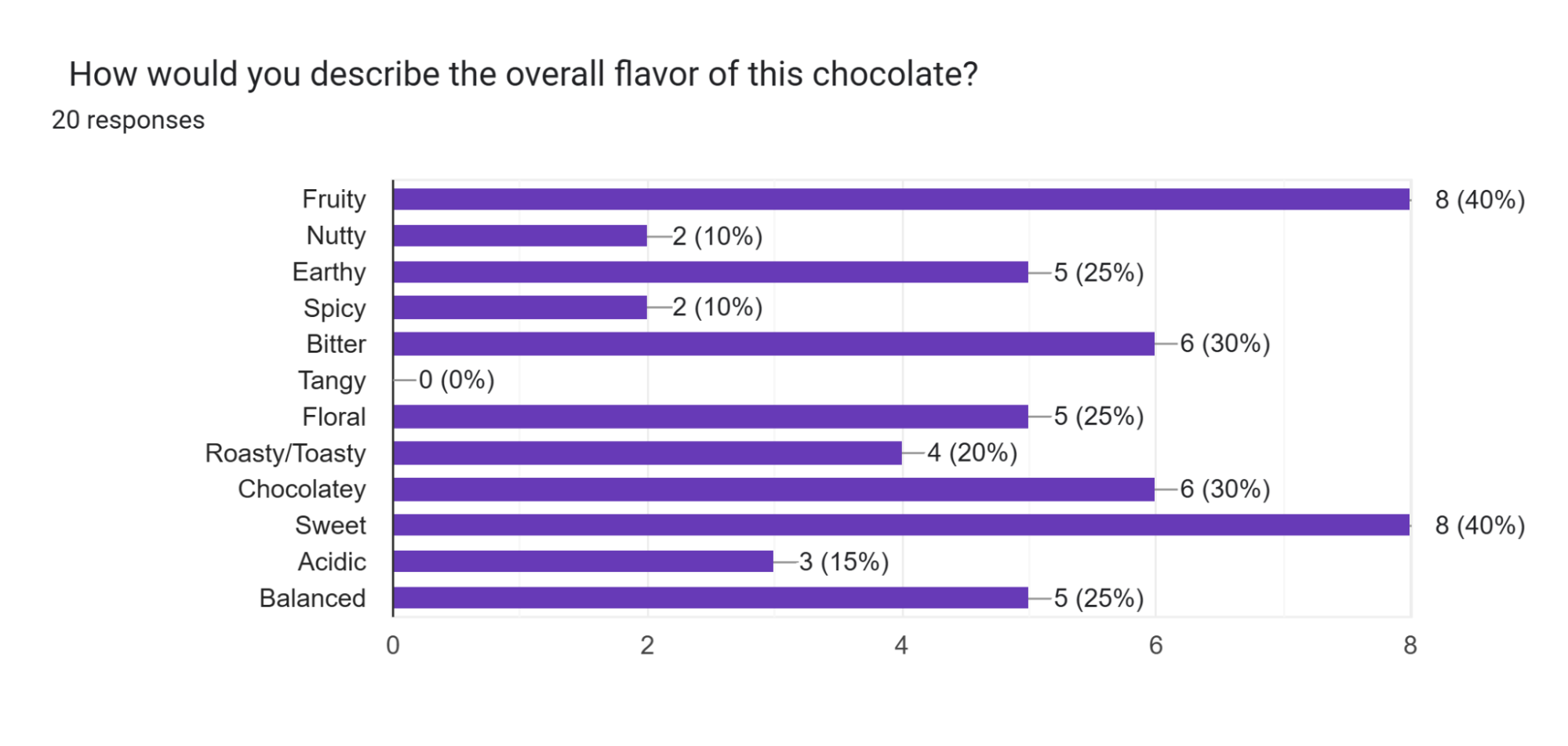
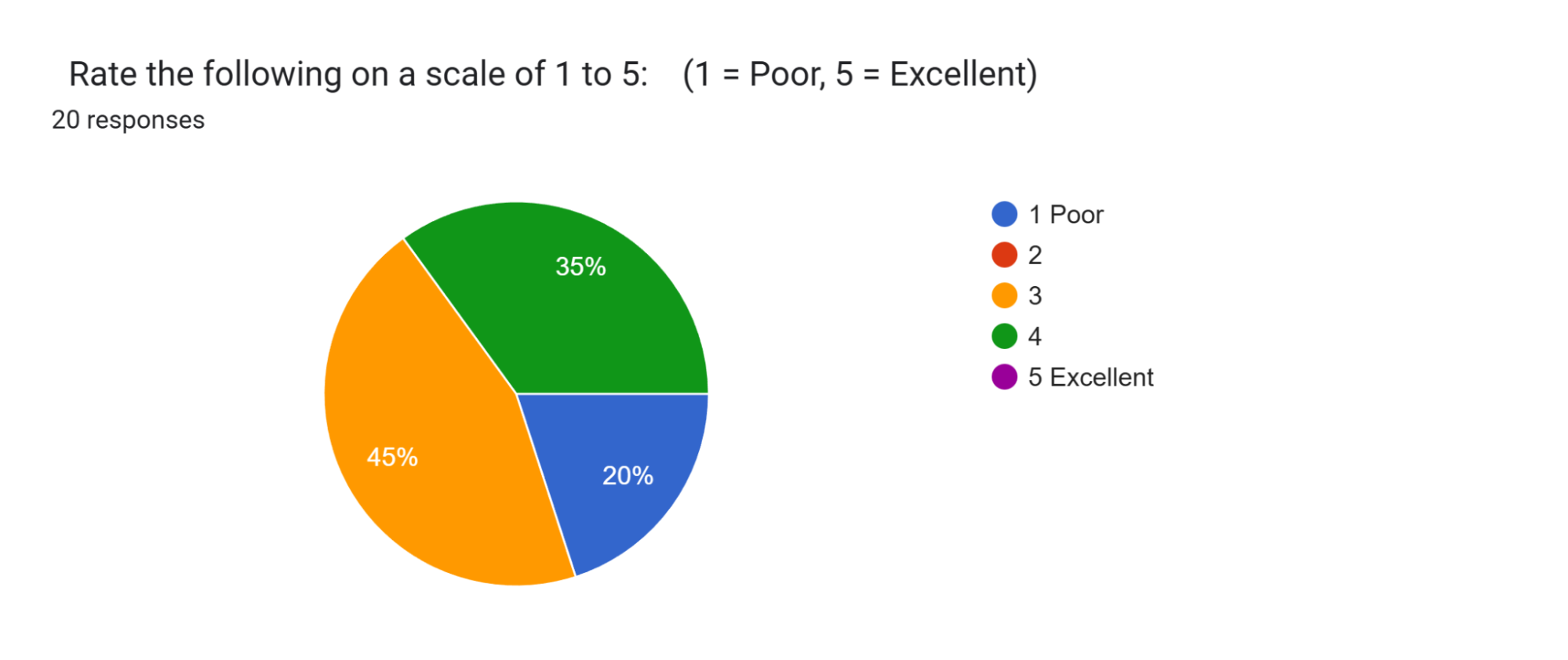
Sample D: Madagascar
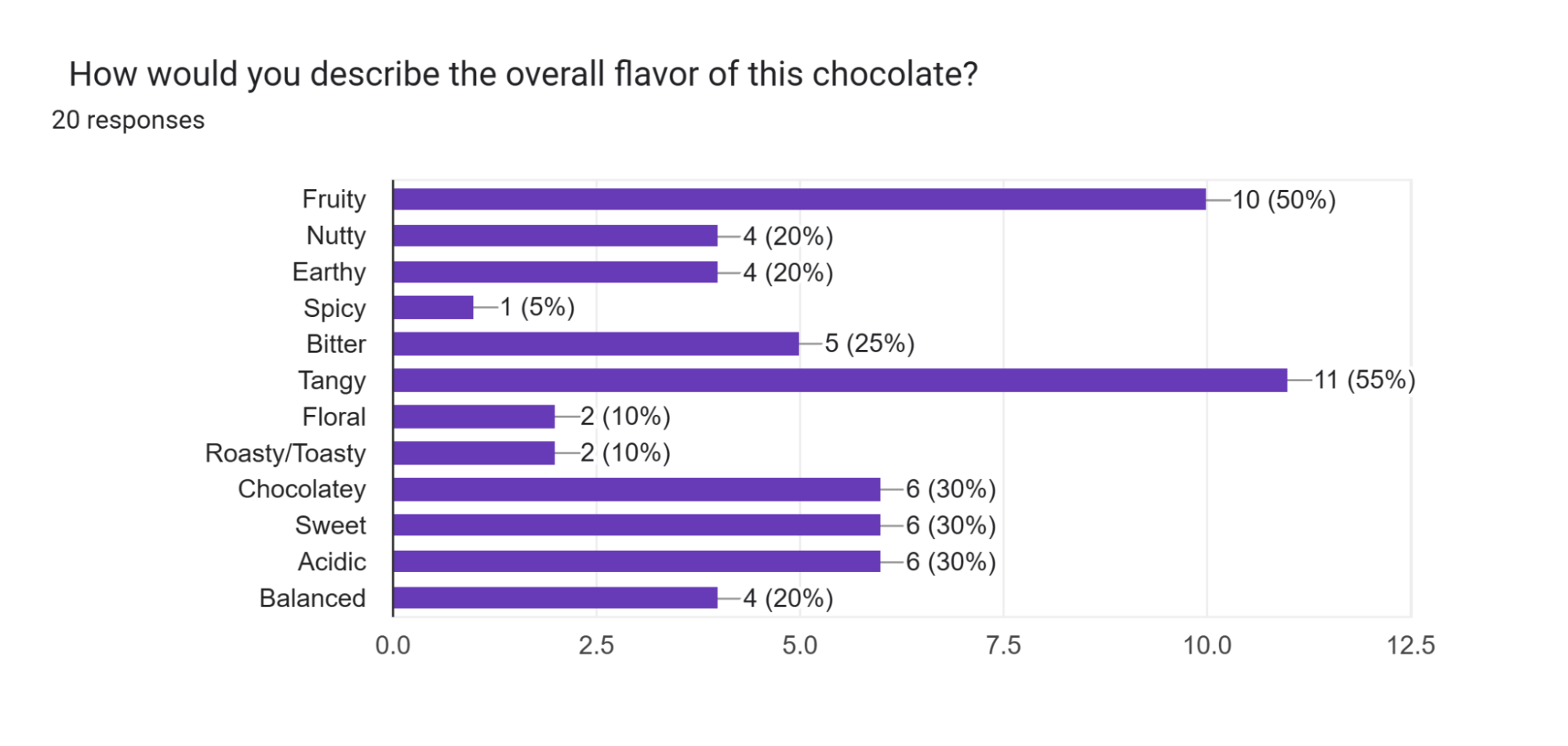
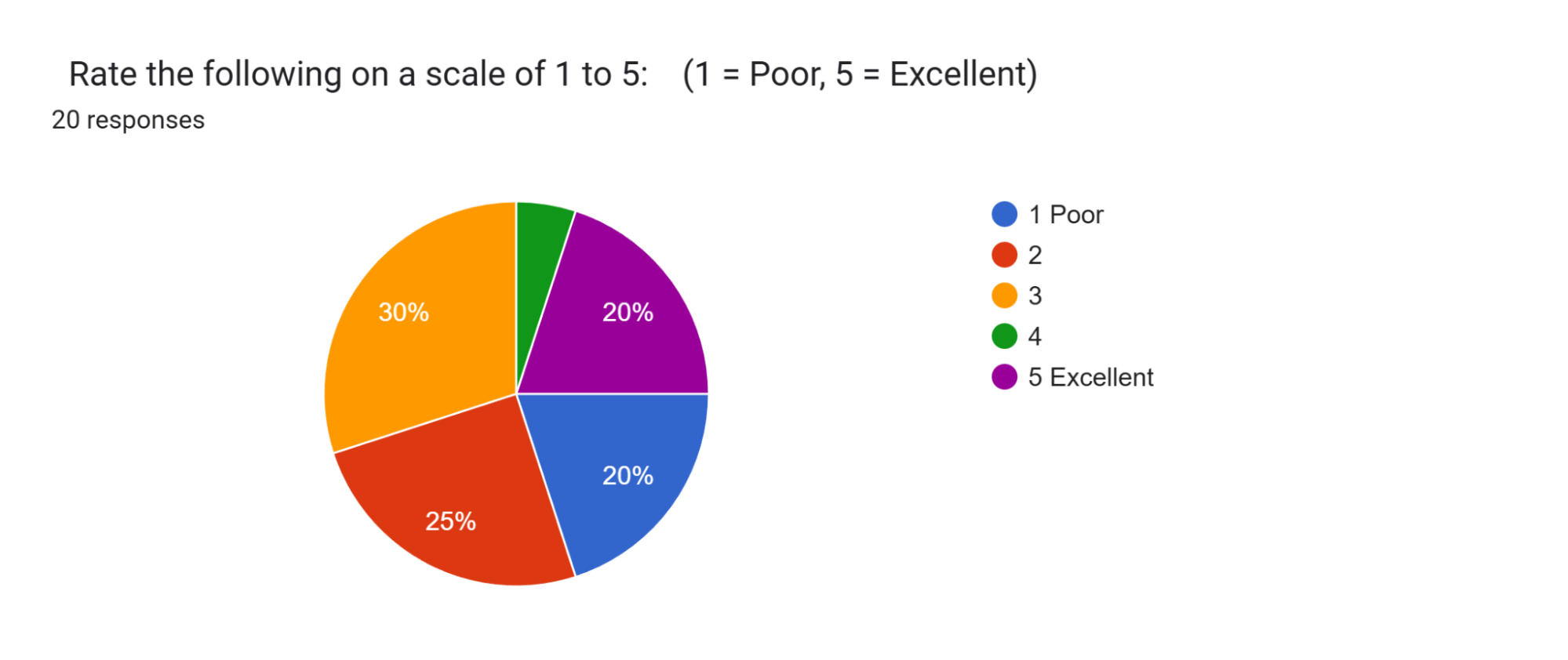
Overall Favorites:
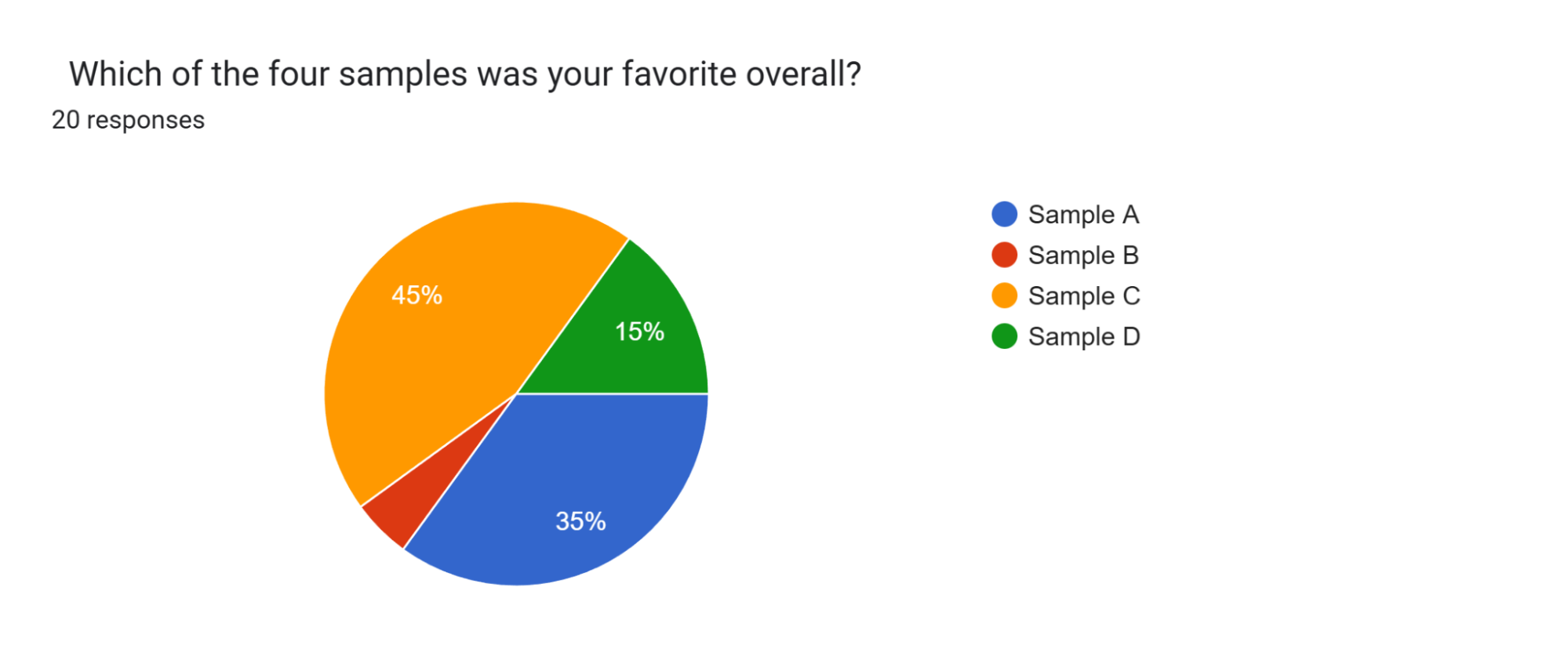
A: Ghana, B: Ecuador, C: Peru, D: Madagascar
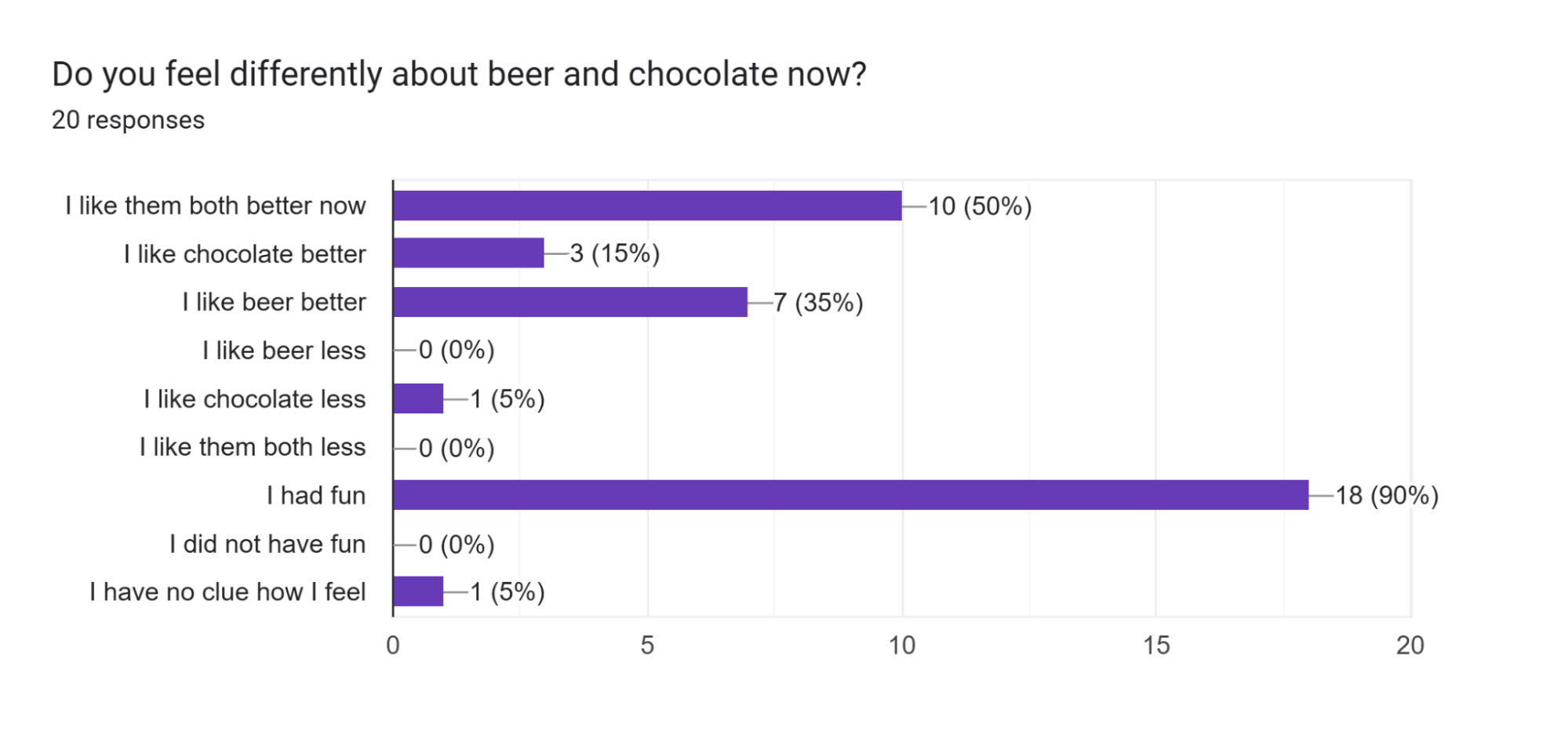
I plan to keep doing more pairings. Chocolate works wonderfully with things like wine, tea, and of course with beer! If you host your own pairings, I cannot recommend David’s book enough (Ed. note: hey, thanks!). I hope you get a chance to check out some of the beer and chocolate mentioned, as well as a chance to listen to the podcast episode where I chat more with David about my experience studying the chemistry of chocolate.