Pairing Christmas Beers with Craft Chocolate
Many breweries release special beers for Christmas or the winter season in general, and these are often among the most beloved beers on a brewery’s annual release calendar. The challenge to providing pairing guidance to these beers as a group is that there is no one style for “Christmas beers.” Breweries can market any style of beer they want to as a holiday seasonal, from IPAs to Stouts to Doppelbocks.
That said, there are two formats for Christmas beers that are more common than others, so let’s look at how to pair them with craft chocolate.
Spiced Christmas Beers

Pick up my book Pairing Beer & Chocolate!
These beers are typically amber or brown and 6-8% ABV, with a malty profile, and moderate sweetness. Their defining characteristic is the use of baking spices to give them a comforting and familiar holiday flavor profile. Spices like cinnamon, nutmeg, ginger, clove, and allspice are common, though others can be used as well.
There is of course a lot of variation between individual examples, but here are some general guidelines to keep in mind when pairing these spiced holiday beers with craft chocolate.
Challenges: The biggest challenge with these beers is preventing the spices from becoming harsh or bitter in combination with the chocolate. The best examples of these beers use a measured hand with the spicing, but even then, spice notes can hook onto the bitterness of some bars and make things unpleasant.
This can be exacerbated by the misleading sweetness level of some of these beers. Because we typically associate these dessert flavors with sweetness, we can sometimes imagine more sweetness in these beers than is actually there. The best examples have a touch of sweetness, but not so much they becoming cloying.
Avoid: Dark chocolates with notable bitterness or acidity, higher percentage dark chocolate bars, and most bars with their own spice or herbal inclusions, or other potentially bitter inclusions like coffee.
Options for Pairing
If you want to lean into the sweetness of the pairing, highlight those dessert flavors, and play off the malt base of the beer, you can pair with a bar that uses caramel, toffee, maple, or another dark sugar as an inclusion. The dark sugar will pull forward the malt character of the beer, provide obvious sweetness, and offer a fuller foundation for the gentle spices in the beer.
If you want to contrast the warm flavors of the beer with something brighter, try a low to medium percentage dark chocolate with a cherry or cranberry inclusion. The gentle tartness of the fruit will contrast with the sweetness of the beer and brighten the entire pairing, and both fruits will work with the baking spices in the beer as well. Bars like Ritual Candied Orange & Cranberry 70% or Moka Origins Tanzania Cherry are excellent choices.
Belgian Christmas Ales
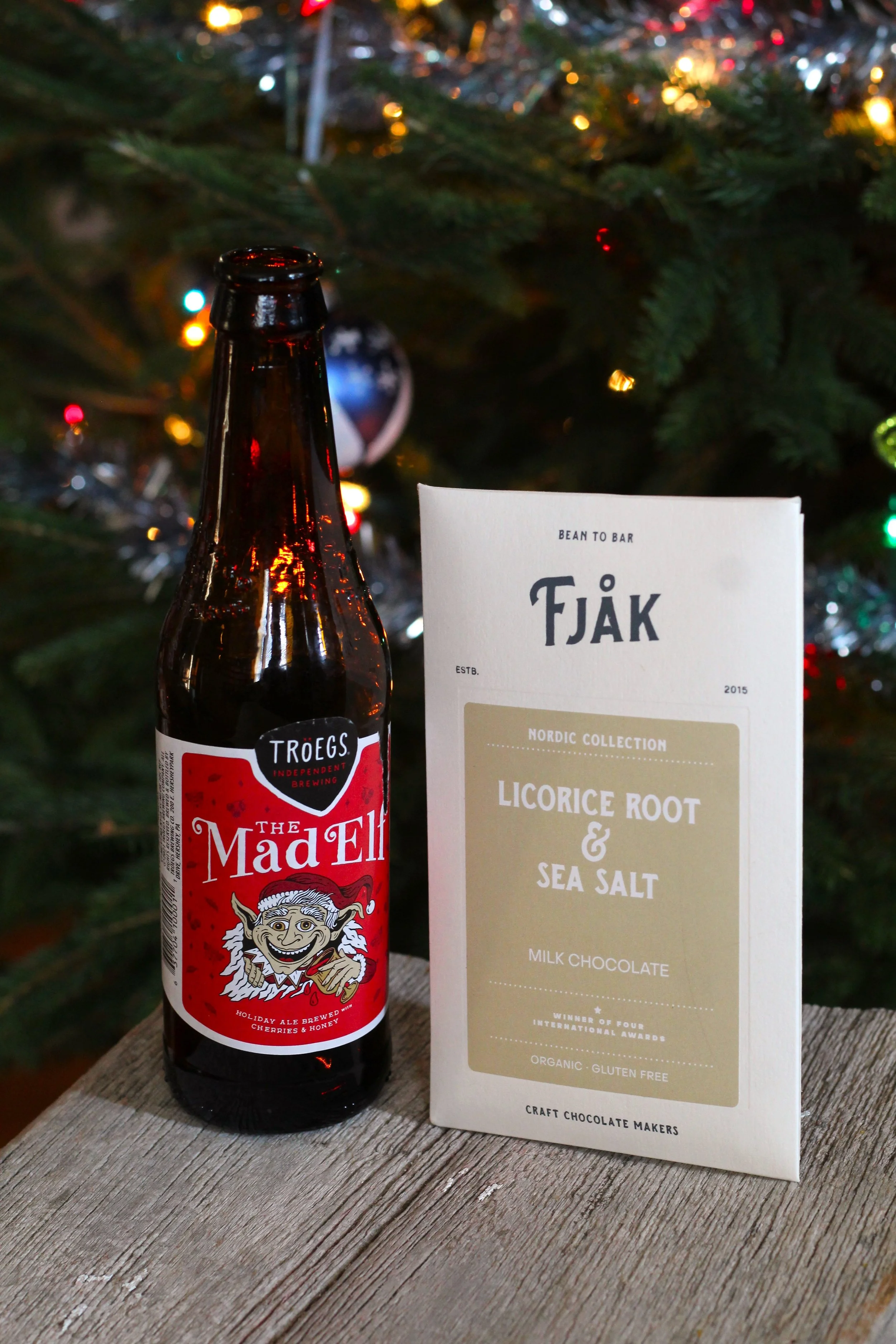
Belgium has a tradition of brewing special beers for Christmas as well. Many of them are available here in the U.S., and some American breweries release a Belgian-style beer for Christmas as well. While these beers can be subtly spiced, they’re more commonly classic Belgian styles brewed either without spices or only very subtly spiced. The most common choice would be a Belgian Dark Strong Ale.
These strong beers present a complex balance of malt and fermentation flavors, with dark bread, dark sugar/caramel, dried and stewed fruits, subtle spice, and gentle perfumy alcohol notes, with a warming strength and full, creamy mouthfeel despite finishing fairly dry.
Challenges: Despite often having a sweet flavor perception, these beers generally don’t have a ton of residual sugar. This dryness can be exposed in harsh and bitter ways by chocolates with rough edges of their own. Additionally, the alcohol heat of these beers can be rendered solventy by some pairings.
Avoid: Most bars under 65% will get washed out by Quads, and most over 80% will be too bitter. Bars with spice additions—which may pair well in concept—often become harsh and bitter when they meet this style’s high alcohol content and relative dryness.
Options for Pairing: Many Belgian Christmas ales are excellent candidates for experimenting with single origin dark chocolates due to their complex but gentle flavor profiles and impression of sweetness. Grab some single origins bars in the 70-80% range, particularly those with fruitier notes, and try them with one of these beers to see which you like best!
Alternately, you can work with dark chocolate bars with rounder spice inclusions, like vanilla or licorice root, which will complement the dried fruit and subtle fermentation spice notes in the beer.
Other Winter Beer Styles
As mentioned earlier, many other beer styles can be marketed as Christmas or winter seasonals. You can find pairing guidance for many common examples here:
IPAs
Doppelbocks
Porters & Stouts
Bourbon Barrel-Aged Beers